
First of all:
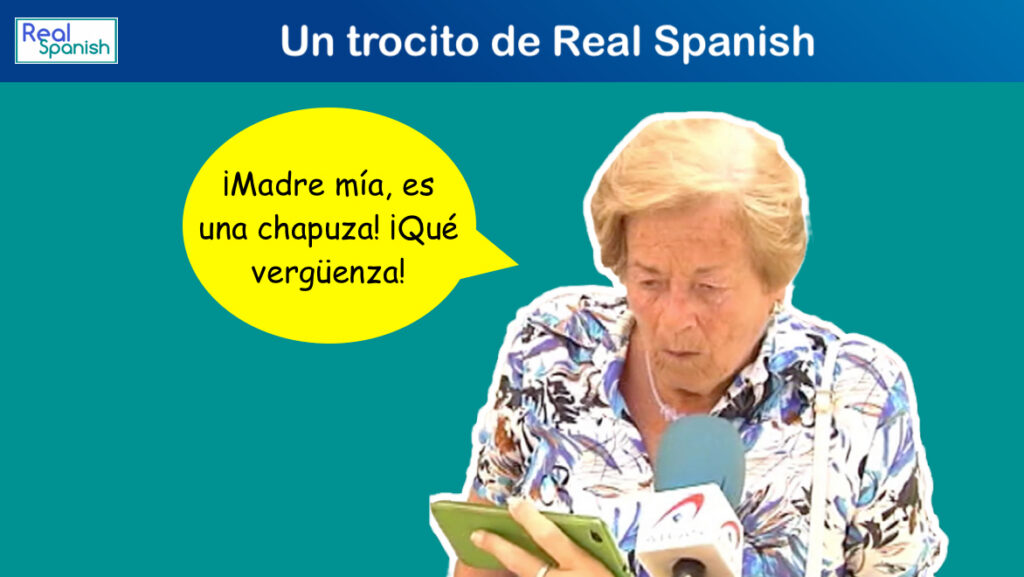
This video is one of our “Trocitos de Real Spanish” — short clips from our Spanish lessons to help you get used to real, everyday Spanish. A trocito literally means “a little piece” of something — usually something you can eat, like un trocito de queso (“a little piece of cheese”). This particular one is a preview of the full lesson ¡Es una chapuza!, from our course Español con noticias y documentales 1: Entrevistas y reportajes.
Hi there! I'm Elizabeth from Real Spanish, and like you, I'm passionate about learning Spanish.
This video is all about Spain’s artistic heritage — and what happens when a restoration goes so badly wrong that it becomes a national embarrassment. Some of these stories were so shocking that they even made the news in other countries.
And there’s more! You’ll also come across one of the most famous Spanish “false friends”: embarazada does not mean “embarrassed”... although you probably already knew that!
Click on the image to view the video.
Transcript: Download the PDF
Note: This transcript has been slightly updated to reflect our current courses and resources, so the video may differ slightly from the text.
We recommend listening to the audio first with the transcript, then without it, until you can make out every word. You can even repeat some sentences after the narrator, then record yourself and compare your pronunciation with hers. Keep going until you really do sound better.
Bonus: update on this story
The world's most famous restoration chapuza happened in 2012, in the town of Borja, near Zaragoza. Cecilia Giménez, a local resident, took it upon herself to restore a 19th-century fresco titled Ecce Homo, painted by Elías García Martínez, in the Sanctuary of Mercy church. The result — Christ's face turned into something resembling a hairy monkey — went viral worldwide under the nickname Mono Cristo (“Monkey Christ”).
Cecilia Giménez died on 31 December 2025, at the age of 94. But against all odds, her botched restoration had a happy ending: over 150,000 tourists have visited Borja to see the fresco for themselves, a small museum dedicated to the story opened in 2016, and she herself went on to exhibit 28 of her own paintings in the town. You can read the full story at The Art Newspaper.
Links to related articles
La leyenda de San Jorge y el dragón
How 'Monkey Christ' brought new life to a quiet Spanish town
10 restauraciones de edificios en España que todos lamentan y ya no tienen vuelta atrás
Botched Spanish statue that went viral is lovingly unrestored
Spain’s latest ‘Ecce Homo’: how a botched restoration made global headlines
Spanish statue bodge-up is a new rival to Borja's Monkey Christ
Frequently asked questions
What does una chapuza mean?
It's a colloquial word for a shoddy, badly-done job — especially building or DIY work. According to the RAE, a chapuza is “work done badly and without care” (RAE's own gloss, translated here).
Is avergonzado the same as embarazada?
No — and it's one of the most famous false friends in Spanish for English speakers. Avergonzado means “embarrassed”: according to the RAE, avergonzar means “to cause shame”. Embarazada, on the other hand, mainly means “pregnant”: the RAE defines it, said of a woman, as “pregnant”. Interestingly, the RAE also records a second sense of embarazada close to “embarrassed” (“inhibited or uncomfortable acting naturally”), but almost nobody uses it that way in practice: if you say estoy embarazada, everyone will understand that you're expecting a baby.
What's the difference between ser orgulloso and estar orgulloso?
Ser orgulloso describes a permanent character trait — someone arrogant or haughty by nature. Estar orgulloso (de algo), on the other hand, describes a specific, positive feeling, usually tied to an achievement of your own or someone else's. It's another example of the general pattern the RAE describes: “the verb ser combines with attributes that designate permanent characteristics of the subject, while estar takes those that indicate transitory properties” (RAE's own gloss, translated here).
What does ¡qué vergüenza! mean?
It's used to express that something (or someone) is humiliating or shameful. It matches one of the senses of vergüenza recorded by the RAE: “something or someone that causes shame or dishonor”.
What does salir a la luz mean?
It means for something previously hidden — like a botched restoration — to become public or known. According to the RAE, it's used “said of something hidden: to become apparent”.
More questions? Drop us a comment below!
Check out these resources:
You can find the complete lesson "¡Es una chapuza!" in our course Español con noticias y documentales 1: Entrevistas y reportajes. You’ll also get the grammar worksheet and all the other lesson materials. Try a free lesson today!
Not ready to commit to a full course? Try a free lesson from Real Spanish for Perfectionists, our new series of ebooks + videos.
As Carmen says, “embarazada” and “embarrassed” are a classic example of the many false friends between Spanish and English. Can you think of any others? I’m sure you can—share in the comments! You can also leave us a comment, suggestion, or question. We’d love to hear from you.