
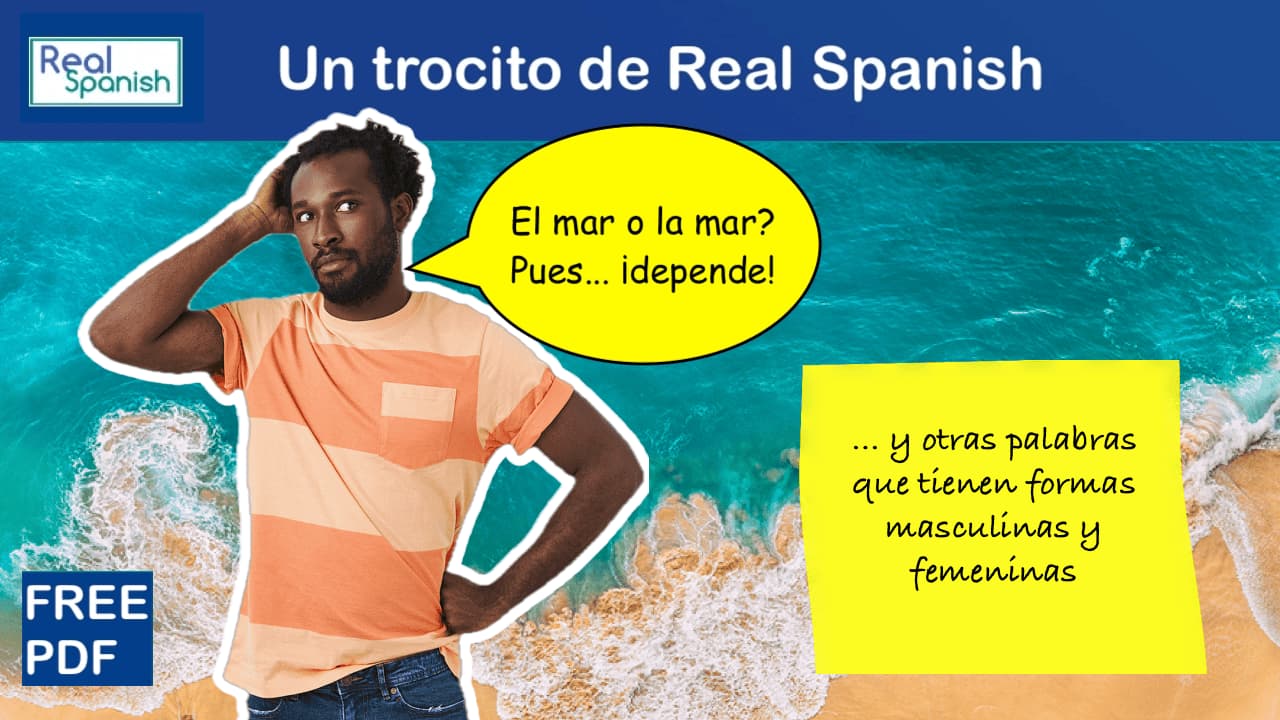
Un trocito de Real Spanish | “El mar” or “la mar”? Well, that depends!
“El mar” or “la mar”? Well, that depends! First of all: This video is one of our “Trocitos de Real Spanish” (Little Bits of Real Spanish). A trocito is a small amount of something — usually something to eat, like a trocito of chocolate! This particular one is a preview of a full lesson from our ebook Spanish for Perfectionists No. 1. Below you'll also find a link to a free sample lesson from Spanish for Perfectionists No. 2. Hi there! I'm Elizabeth from Real Spanish, and like you, I'm passionate about learning Spanish. After all these years of studying, I thought I'd pretty much figured out which nouns are masculine and which are feminine. What a surprise it was to discover that el mar and la mar both exist! Same word, two genders, and a nuance of difference between them that's worth knowing. The video below explains when to use el mar and when to use la mar, plus several really cool expressions with the word mar that native speakers use all the time. Heads up: a couple of them are a little vulgar! To view the video, click on the image. Transcript: Download the PDF How to get the most out of the video and transcript The transcript is the exact text of the video script. Read it before watching the video if you like, but always read it afterwards while you listen to the audio, several times. As you listen, pay attention to intonation, phrasing, pace and the individual sounds of Spanish. Then choose a sentence or two to read aloud in time with the speaker, imitating them as closely as you can. Later you can record yourself and compare your speech with theirs. This procedure works well: Listen and repeat several times, imitating the speaker as closely as possible. When you’re ready, record yourself. Listen to the speaker again and immediately listen to yourself. Repeat until you’re satisfied that your pronunciation is closer to the speaker’s. Doing this several times over a few days, and several more times over the next few weeks, will help tune your ear to Spanish and make your own speech easier to understand. It’s unlikely that adults who start learning a language after puberty will end up with a native-speaker accent, but with persistence you can sound more natural and less hesitant, feel more confident, speak more fluently and, above all, be understood. You have to do the work! This method is probably more work than you expected... but repetition is essential for learning a language and developing fluency. There are no shortcuts, but we promise you’ll enjoy learning with our engaging video lessons. Bonus: a poem, and a few more expressions El mar. La mar. El mar. ¡Sólo la mar! ¿Por qué me trajiste, padre, a la ciudad? Rafael Alberti, Marinero en Tierra (1924) (“The sea. The sea. The sea, only the sea! Father, why did you bring me to the city?”)