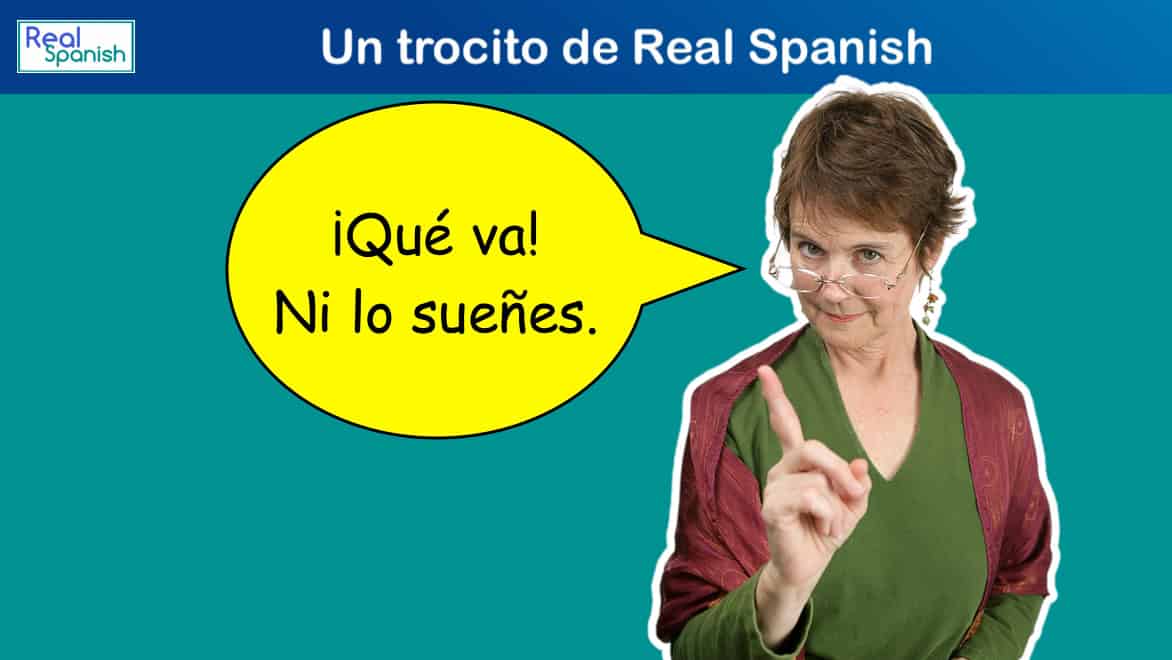
Un trocito de Real Spanish | "Pero ¿Qué fiesta? ¡Ni qué niño muerto!" and other great ways to give a firm "no!" in Spanish
First of all: Do you know the expression !Qué va!? We explain it in this video, along with other great

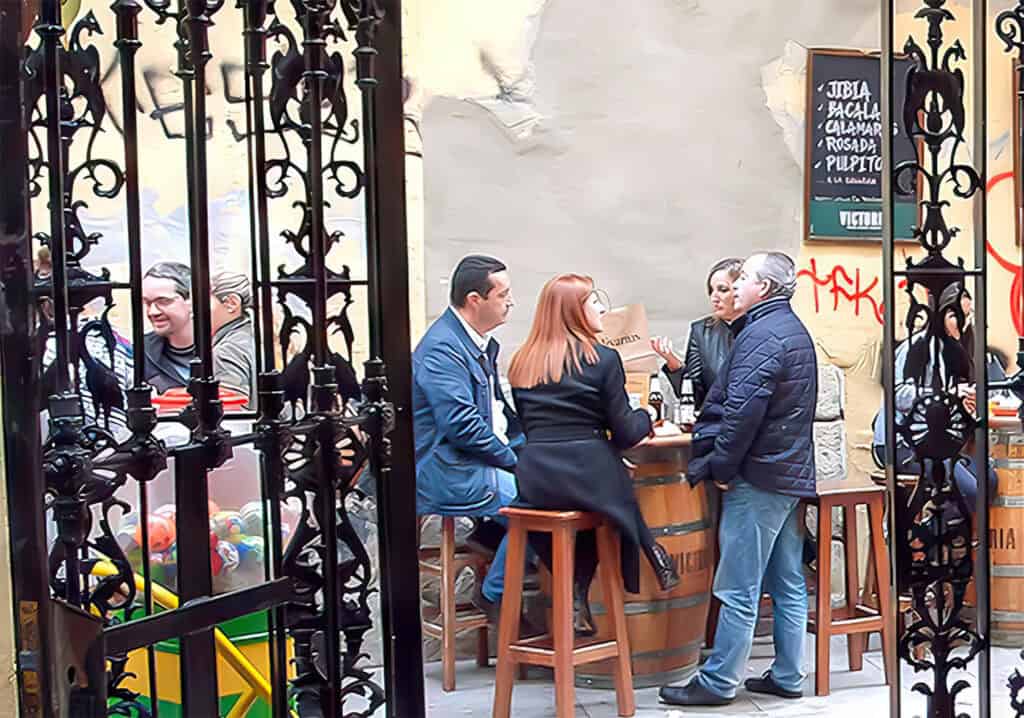
First of all: Do you know the expression !Qué va!? We explain it in this video, along with other great
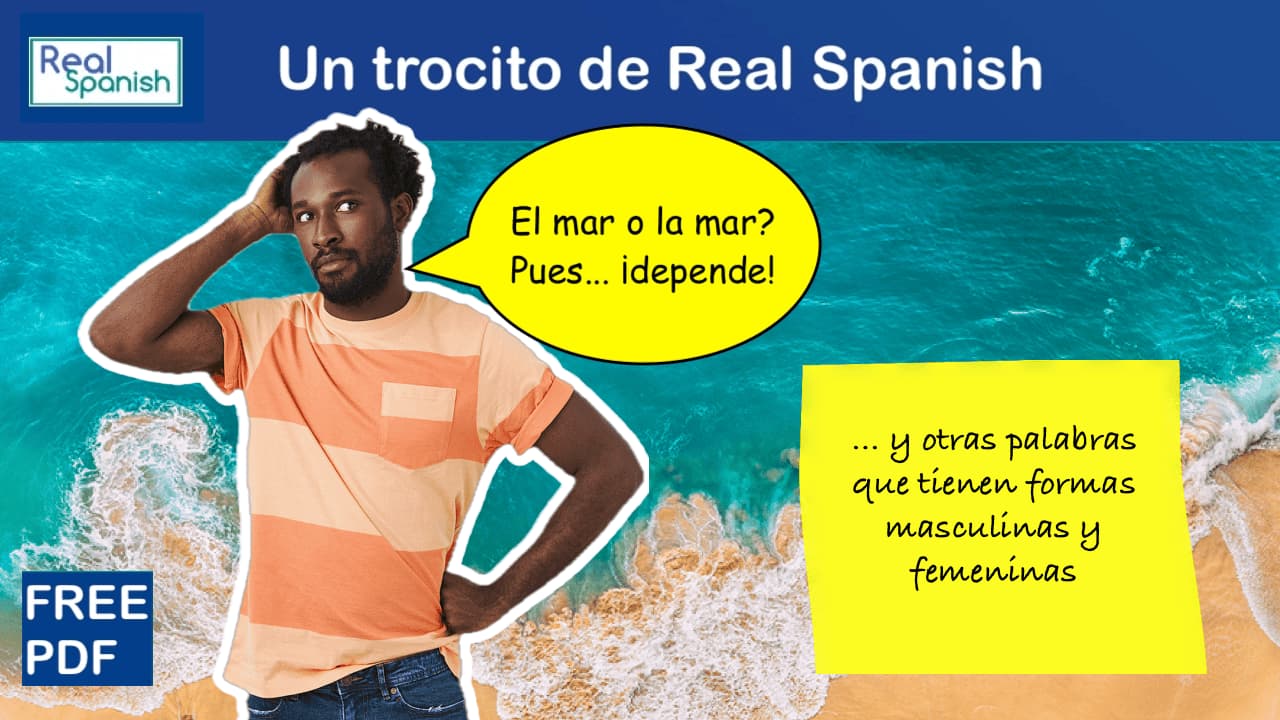
“El mar” or “la mar”? Well, that depends! First of all: This video is one of our “Trocitos de Real Spanish” (Little Bits of Real Spanish). A trocito is a small amount of something — usually something to eat, like a trocito of chocolate! This particular one is a preview of a full lesson from our ebook Spanish for Perfectionists No. 1. Below you'll also find a link to a free sample lesson from Spanish for Perfectionists No. 2. Hi there! I'm Elizabeth from Real Spanish, and like you, I'm passionate about learning Spanish. After all these years of studying, I thought I'd pretty much figured out which nouns are masculine and which are feminine. What a surprise it was to discover that el mar and la mar both exist! Same word, two genders, and a nuance of difference between them that's worth knowing. The video below explains when to use el mar and when to use la mar, plus several really cool expressions with the word mar that native speakers use all the time. Heads up: a couple of them are a little vulgar! To view the video, click on the image. Transcript: Download the PDF How to get the most out of the video and transcript The transcript is the exact text of the video script. Read it before watching the video if you like, but always read it afterwards while you listen to the audio, several times. As you listen, pay attention to intonation, phrasing, pace and the individual sounds of Spanish. Then choose a sentence or two to read aloud in time with the speaker, imitating them as closely as you can. Later you can record yourself and compare your speech with theirs. This procedure works well: Listen and repeat several times, imitating the speaker as closely as possible. When you’re ready, record yourself. Listen to the speaker again and immediately listen to yourself. Repeat until you’re satisfied that your pronunciation is closer to the speaker’s. Doing this several times over a few days, and several more times over the next few weeks, will help tune your ear to Spanish and make your own speech easier to understand. It’s unlikely that adults who start learning a language after puberty will end up with a native-speaker accent, but with persistence you can sound more natural and less hesitant, feel more confident, speak more fluently and, above all, be understood. You have to do the work! This method is probably more work than you expected... but repetition is essential for learning a language and developing fluency. There are no shortcuts, but we promise you’ll enjoy learning with our engaging video lessons. Bonus: a poem, and a few more expressions El mar. La mar. El mar. ¡Sólo la mar! ¿Por qué me trajiste, padre, a la ciudad? Rafael Alberti, Marinero en Tierra (1924) (“The sea. The sea. The sea, only the sea! Father, why did you bring me to the city?”)
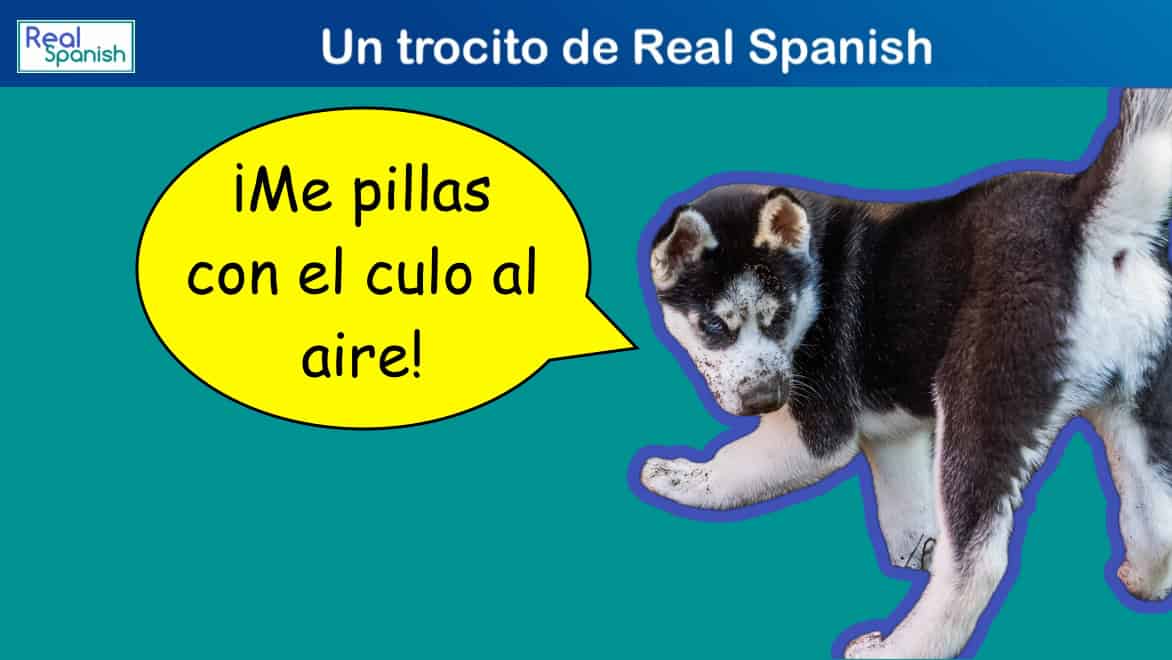
First of all: The videos below are “Trocitos” from our YouTube channel. Un trocito is “a little bit” of something — usually something to eat. If you want to push yourself a bit, try reading the blog and viewing the videos in the Spanish version first. You can always come back here if you want to check a particular word or phrase. Just click on “English” or “Español” in the menu above. The first video below is part of a complete lesson in our ebook “Spanish for Perfectionists No. 2”. See below for more information about our ebooks and a free sample lesson. You’ll also find a bonus video featuring estirar la pata, por los pelos, and more. Hi. I’m Elizabeth, from Real Spanish, and a keen learner of Spanish, like you. I’ve always been fascinated by how languages use the human body to express everything from mood and attitude to honesty and betrayal. Think of the expression “to put your foot down” in English. Spanish is full of such expressions. The first time I heard someone talk about a politician who’d been pillado con el culo al aire — literally “with their backside/arse/ass in the air” — I guessed from the context that it was something like “caught with their pants/trousers down” (caught out in an embarrassing or scandalous situation). I loved the image. That’s the thing about body part idioms in Spanish: they’re vivid, memorable, and often very funny. Once you know them, you start hearing them everywhere. Con el culo al aire is often used in conversations about corrupt politicians or badly-behaved celebrities. Every country has them! In this video, our virtual teacher Celia introduces several expressions with parts of the body. Some are perfectly polite in any situation, while others are a bit vulgar. But they’re all real Spanish, used by native speakers every day, so it’s definitely worth knowing what they mean, even if you choose not to use them yourself! Why not start your own collection of Spanish expressions? I keep a running list, and I add to it whenever I hear something new: in podcasts, films, or just chatting with native speakers. The key is to note them in context, so you remember how they’re actually used. WordReference.com is brilliant for this: it gives you real examples, not just definitions. All the best for your adventures in Spanish, Elizabeth from Real Spanish The video: “Con el culo al aire”: Spanish expressions related to parts of the human body In this video you’ll hear these Spanish idioms that are common use in everyday conversations: dar la cara levantarse con el pie izquierdo dormir a pierna suelta estar hasta las narices / la coronilla / el moño / los cojones tener la lengua muy larga dejar (or pillar) a alguien con el culo en el aire lamerle el culo a alguien English transcript Hello! At Real Spanish we’re creating a series of mini-lessons on expressions that refer to parts of the human
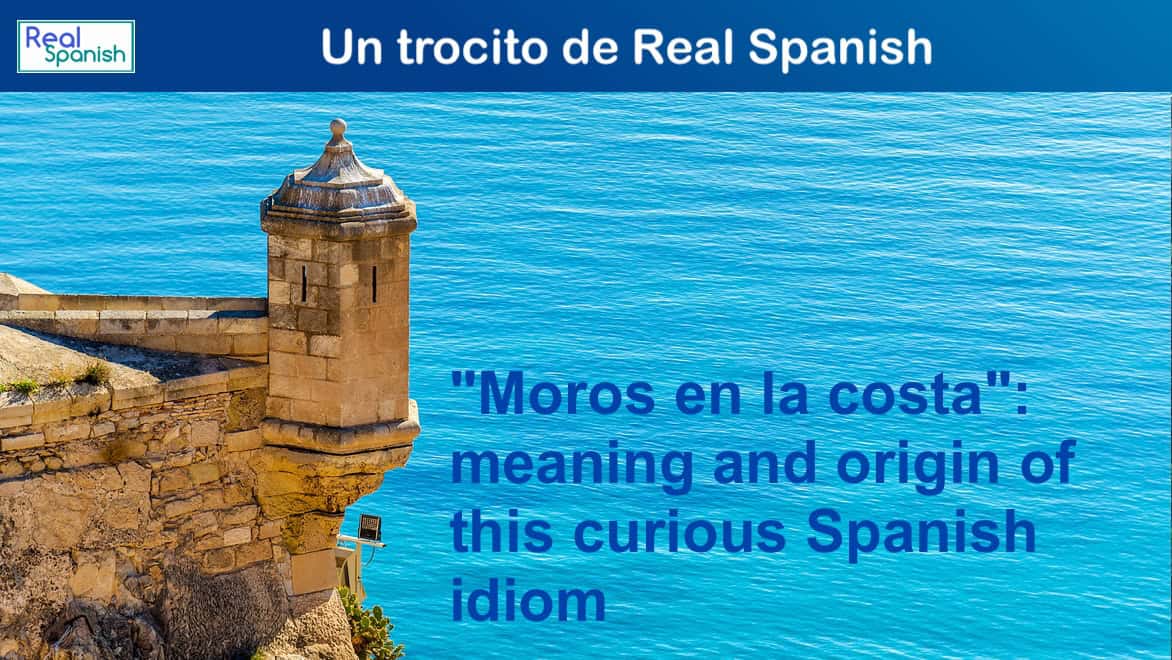
First of all: This is the English version of the transcript of one of our "Trocitos de Real Spanish". Un trocito is a little bit of something (usually something to eat). This Trocito is a preview of our online Spanish course “Español con noticias y documentales 2: La historia de tres regiones bilingües de España”. The additional learning materials referred to in the video are available in the complete course. You’ll find a link to this and all our courses below. If you want to push yourself, try reading the Spanish version of this blogpost and video transcript first (just click on “español” in the menu above) — then come back here to check anything you're not sure about. Hello! I’m Elizabeth, from Real Spanish, and a dedicated student of Spanish. I love learning new expressions in Spanish. As you know, most of them can’t be translated literally because they are based on the culture and history of the Spanish-speaking world. Some are local to a particular country or region. Some are so interesting that they deserve a video all to themselves! If you’ve spent any time with Spanish speakers, you’ve probably heard someone suddenly lower their voice and mutter ¡Moros en la costa! — maybe when the boss walks in, or when a sibling appears at an inconvenient moment. But where does this expression come from, and what do Moors have to do with it? The story takes us back to medieval Spain, a network of coastal watchtowers (torres vigía), and a very real danger that kept entire villages on permanent alert for centuries. The video below explains the origin of ¡Moros en la costa!, one of the most colourful idioms in everyday Spanish, which can be traced back to its historical roots: the constant raids by North African Muslims along the Mediterranean coast, and the very real danger that kept coastal villages on permanent alert. It also touches on a related expression, prometer el oro y el moro, and looks honestly at why both expressions carry some cultural baggage worth knowing about. Wishing you all the best for your adventures in Spanish, Elizabeth from Real Spanish Click on the image to view the video Download the transcript Interesting! That’s the magic of expressions like this one — they’re living fossils of the culture that created them. Every time a Spanish speaker whispers ¡Moros en la costa! across a dinner table, they’re unknowingly echoing the voice of a medieval lookout scanning the horizon for sails. If you enjoyed this video, you'll like a related video featuring the expression “Como Pedro por su casa”, another popular Spanish saying based on historical events. You might also be interested in the complete course “Español con noticias y documentales 2: Tres regiones bilingües de España”. Visit us to learn more and try some free sample lessons. If you like learning expressions like this, check out our YouTube playlists. Ready for something more demanding? Take a look at our online Spanish
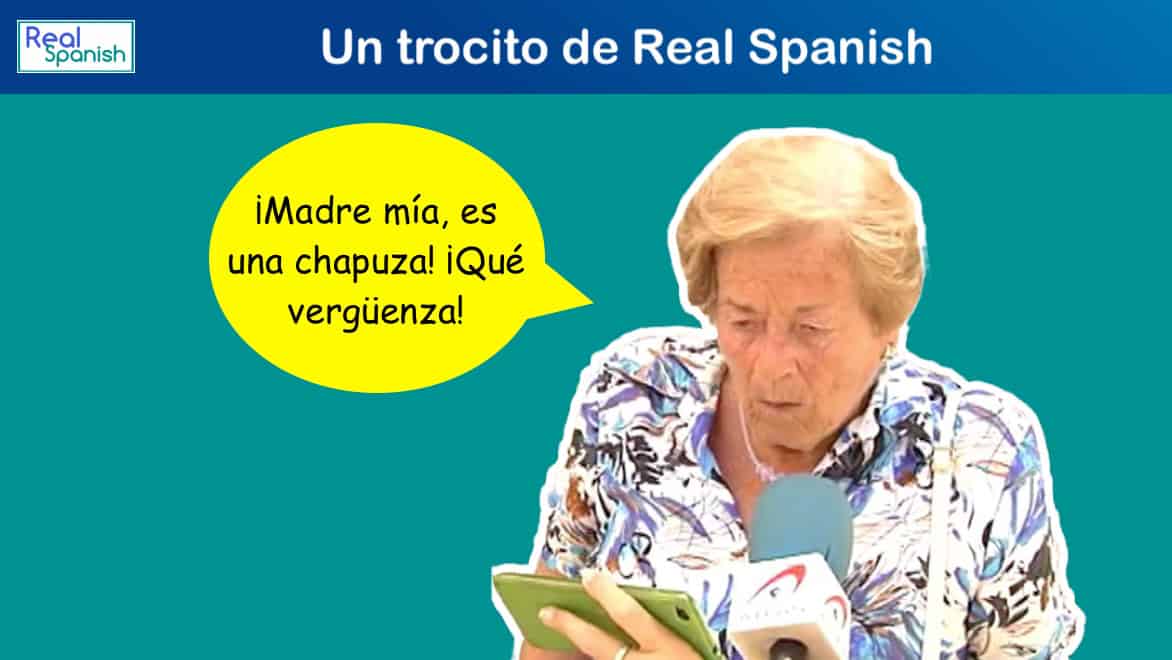
First of all: In this video you'll learn the word chapuza and other words and expressions related to works of art and Spain's artistic heritage. This video is a preview of the full lesson ¡Es una chapuza!, from our course Español con noticias y documentales 1: Entrevistas y reportajes. This preview is one of our “Trocitos de Real Spanish” — short clips from our Spanish lessons to help you get used to real, everyday Spanish. A trocito literally means “a little piece” of something — usually something you can eat, like un trocito de queso (“a little piece of cheese”). Hi there! I'm Elizabeth from Real Spanish, and like you, I'm passionate about learning Spanish. One of my first visits to Spain was a two-week bus tour highlighting Spain's most famous buildings: churches, art galleries, museums, castles and famous palaces. It was gorgeous but exhausting. I now live in Barcelona, where the Modernista buildings of Gaudí and others have also left a lasting heritage to the city. When people ask why I left Toronto to live here, I always include the art and monuments of Spain as one of the major attractions. This video is all about Spain’s artistic heritage — and what happens when a restoration goes so badly wrong that it becomes a national embarrassment. Some of these stories were so shocking that they even made the news in other countries. Talk about embarrassing — ¡qué vergüenza, de verdad! And there’s more! You’ll also come across one of the most famous Spanish “false friends”: embarazada does not mean “embarrassed”... although you probably already knew that! We'll also explain some adjectives that change their meaning according to whether they are used with ser or estar. Yes, no matter how long we have been studying Spanish, these two verbs keep coming back to bite us. Click on the image to view the video. Transcript: Download the PDF Note: This annotated transcript has been slightly updated to reflect our current courses and resources, so the video may differ slightly from the text. We recommend listening to the audio first with the transcript, then without it, until you can make out every word. You can even repeat some sentences after the narrator, then record yourself and compare your pronunciation with hers. Keep going until you really do sound better. Bonus: update on this story The world's most infamous restoration chapuza happened in 2012, in the town of Borja, near Zaragoza. Cecilia Giménez, a local resident, took it upon herself to restore a 19th-century fresco titled Ecce Homo, painted by Elías García Martínez, in the Sanctuary of Mercy church. The result — Christ's face turned into something resembling a hairy monkey — went viral worldwide under the nickname Mono Cristo (“Monkey Christ”). Cecilia Giménez died on 31 December 2025, at the age of 94. But against all odds, her botched restoration had a happy ending: over 150,000 tourists have visited Borja to see the fresco for themselves, a small museum
First of all: If you want to push yourself, try reading the Spanish version of this intro first. You can always click in the menu above to come back here and check the meaning of a word or phrase. Hi everyone! I’m Elizabeth from Real Spanish, a dedicated Spanish student. I’ve been living in Spain for over a decade and I’m still learning new words and expressions. In fact I have a document where I record at least one a day, gathered from a newspaper, a Netflix show or a normal everyday conversation. Today’s Spanish idiom, "Como Pedro por su casa", is one of them. Sometimes a new phrase is so intriguing that I end up making a video, one of our "Trocitos de Real Spanish", about its origin and meaning. Un trocito is a little bit of something, like a little piece of cheese. This trocito is also a preview of our course "Español con noticias y documentales 2: La historia de tres regiones bilingües de España". So what does “Como Pedro por su casa” mean? It’s an idiomatic expression that means acting as if you own the place (making yourself very much at home somewhere, or taking liberties you probably shouldn’t). But the really fun part is where the expression comes from. The origin is medieval and surprisingly dramatic — watch the video to find out the full story! Wishing you all the best for your adventures in Spanish, Elizabeth from Real Spanish Download the transcript Would you like to see a related Trocito? It's about the expression No hay moros en la costa, another popular Spanish saying that comes from the history of the country. If you like learning expressions like this, check out our YouTube playlists. On our website you can find lots of other free video lessons: some with transcripts, vocabulary and grammar notes, and activities to practice and test what you’ve learned. Hope to see you there! Ready for something more demanding? Take a look at our online Spanish courses.
Carmen Hello, and welcome to Real Spanish. I’m Carmen, one of your virtual teachers. Juan And I’m Juan, another of your virtual teachers. Carmen Have you been studying Spanish for a while, but lose the thread of a conversation because you are thinking about the vocabulary and grammar? Do you still find it very difficult to understand native speakers? That’s not surprising. Native speakers speak very fast— at top speed. I’m sure you already know that «pastilla» is a pill or tablet. But the expression «a toda pastilla» means something else. Another problem is that native speakers use colloquial expressions that you don’t often find in textbooks. You need to listen to many authentic conversations in order to be able to participate in conversation with native speakers. But don’t worry, with Real Spanish you can improve your listening comprehension, increase your vocabulary, learn loads of useful expressions, reinforce your understanding of grammar, and improve your fluency in Spanish. And, at the same time, you can learn a lot about the history and culture of Spanish and the Spanish-speaking world. Real Spanish is your website! Juan In Real Spanish you can enjoy some really interesting video-lessons based on clips from TV and movies. These lessons focus mainly on colloquial language spoken at native-speaker speed. These video-lessons don’t follow a fixed sequence of vocabulary and grammar. And you won’t have to do boring exercises that have nothing to do with the content of the lessons. Instead we focus on the vocabulary, the grammar, the colloquial expressions and some of the grammar points that come up in the clips. We also explain the cultural content and background of the clips. Ambos So let’s go!