Trocitos de Real Spanish

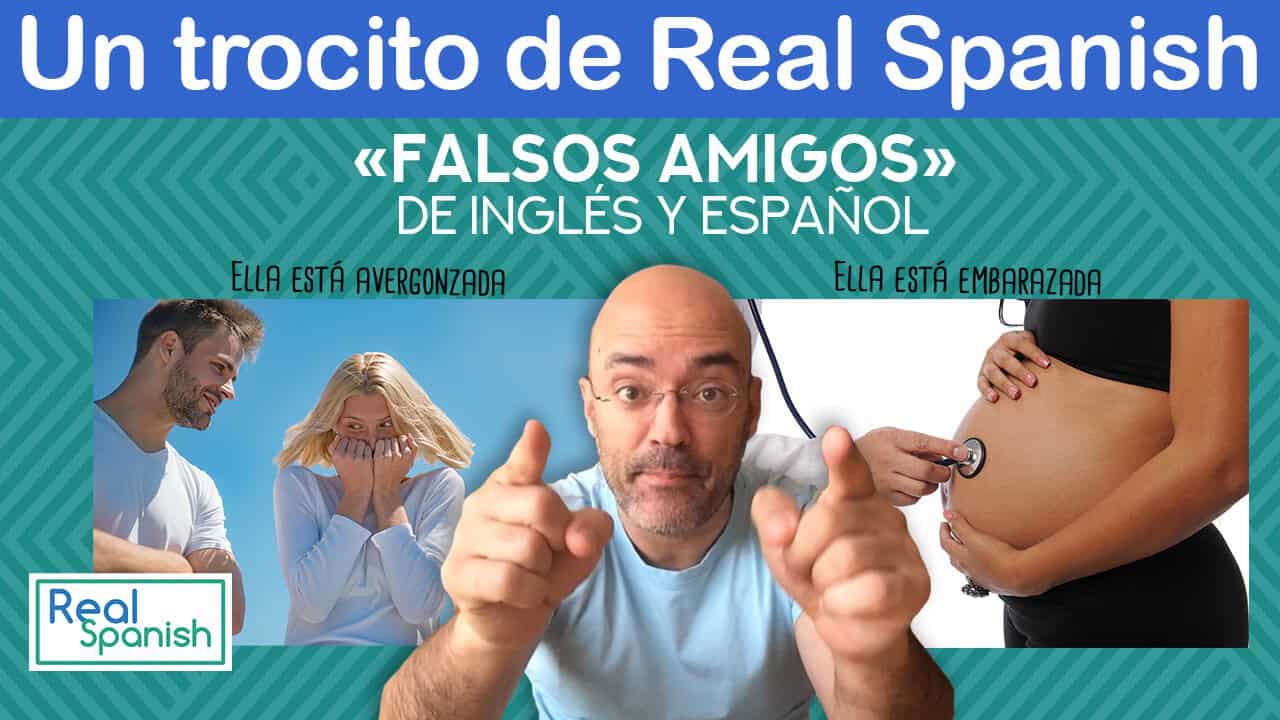
"Embarrassed" and «embarazada» and other false friends

This is the English transcription of the video above. José explains some common «falsos amigos» in English and Spanish (words that are easily confused because they are very similar, but don't have the same meaning).   Hello and welcome to Real Spanish! Today we bring you some examples of falsos amigos (false friends), that is, English words that sound similar to Spanish words but have a different meaning, such as embarrassed (which in Spanish means avergonzado/a) and embarazada (which in English means pregnant). Another false friend that confuses a lot of people is “eventually”, which does not mean eventualmente as one might think, but should be translated as finalmente, al final. Eventualmente means “occasionally”. Other words often confused are “excited” or "exciting"and excitante. “Exciting” normally translates to emocionante in Spanish; be careful with excitante because it often has a sexual meaning. Also the English word “actually” does not mean actualmente, but en realidad. And actualmente translates as “currently” or “at present” in English. Well, as you can see, it is important that you learn these words well because if you make a mistake, it can create very embarrassing situations. And now I encourage you to continue learning with our entertaining lessons on Real Spanish lessons. See you later! If you liked this video, you'll love our complete courses and mini-lessons. Click here to try some free sample lessons. Do you know any other «falsos amigos»? Tell us below!  You can also leave us a comment, a question or a suggestion. We'd love to hear from you! Improve your Spanish with us. Click below to learn about all our great materials . Real Spanish: online Spanish lessons for people who are serious about improving their Spanish.  Click here to learn about all our great materials
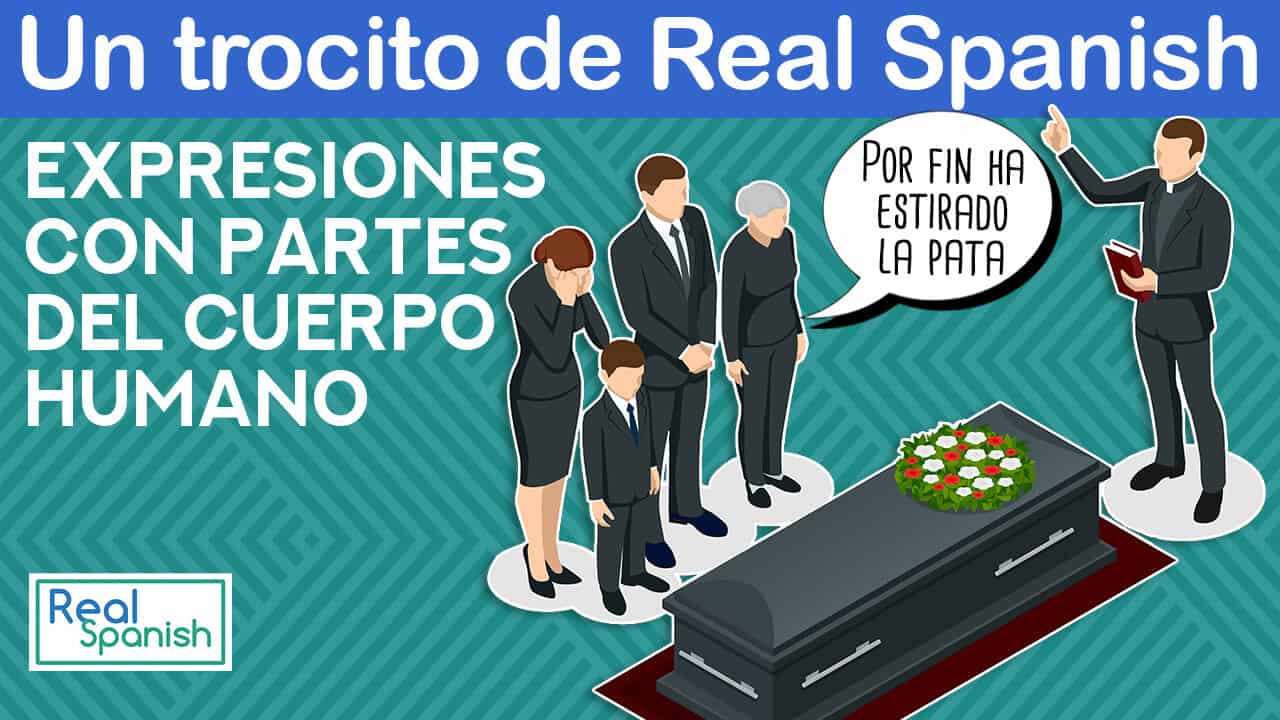
«Estirar la pata» y otras expresiones relacionadas con partes de cuerpo humano

 This is the English transcription of the video above. To get the Spanish transcription, click "Español" in the menu bar above.  Hello! Do you know what the expression "estirar la pata" means? I think with this image you can guess. It is one of the expressions that we explain in our mini-lesson about some expressions that use the word “pata” or “pierna”. Do you know what "con el culo al aire" means? It is a bit vulgar, but it is used a lot, especially when talking about a politician who has been caught red-handed. Have you heard the expression "Por los pelos"? Can you guess the meaning with this image? Lately we have uploaded this mini-lesson. This woman refuses to do anything, very adamantly. We are now working on a mini-lesson on the various expressions with «Ojo» or «Ojos». The expressions that we explain in these mini-lessons are very useful; using them you will sound more natural in Spanish. If you enjoy learning expressions like these, you'll love our mini-lessons. Click below to try a free mini-lesson. Cllick here to learn more about all our mini-lessons and try a free sample lesson Have you heard other expressions related to the human body? Sure you have... tell us about it below! Leave us a comment, a question or a suggestion. We'd love to hear from you. Improve your Spanish with us! Click below  to find out more about our materials and to try some free sample lessons. Real Spanish: online Spanish courses and mini-lessons for people who are serious about improving their Spanish.   Click here to view all our great materials

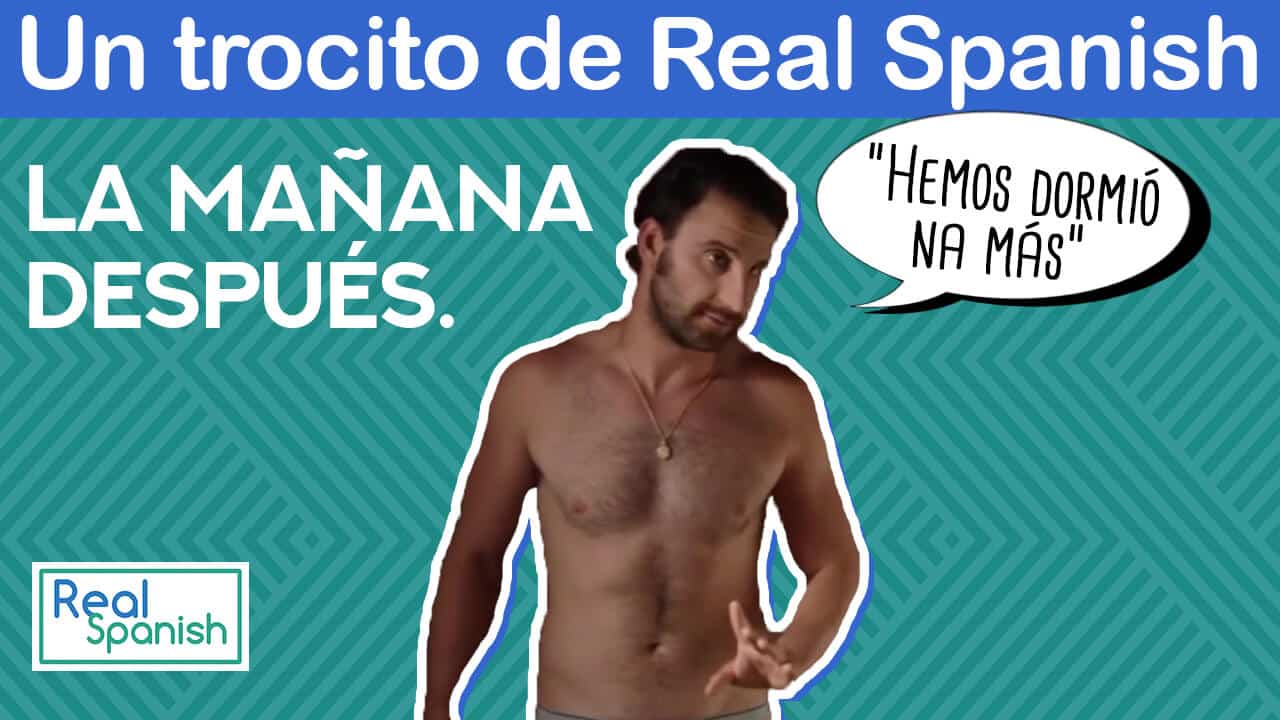
Un trocito de Real Spanish: «La mañana después»

This video is a preview of our course based on the movie «Ocho apellidos vascos». The movie is really funny: you'll crack up! You’ll also hear some examples of Andalusian speech. To view the transciption in Spanish, click «Español» in the menu above.  This video is a preview of our course based on the movie «Ocho apellidos vascos». The movie is a comedy about an impossible romance between a young Basque woman and a man from Andalucía. The cultural differences between them are so great that they could be from different countries. Rafael’s roommate, a young Andalusian man, has just found out that Rafa brought a young Basque woman home last night. He is shocked because he thinks all Basques are terrorists. In this clip you’ll hear some examples of Andalusian speech. For example: quillo/a, from chiquillo/a, an informal form of address the pronunciation of participles ending in la –d-, as in liao (liado): in a mess/tied up with something perdío (perdido) lost dormío (dormido) asleep; slept amamonao (amamonado) clueless, hopeless Other words and expressions you’ll hear include: liarse con alguien: to get involved with someone tirarse a alguien: to have sex with someone tía /tío: colloquial form of address estar amamonao perdío: to be totally dumb -      Rafa, where were you, mate? Because the last time I saw you, you were with the Basque girl, or maybe you got involved with another customer. Did you screw the Basque girl? -      No, no, but don’t tell anyone, we just slept together, nothing more. -      Man, you really are totally dumb, eh? Did you hear the Andalusian accent in this conversation? If you want to know more about this romance, click below. See you soon!   If you enjoy learning expressions like these, you'll love our mini-lessons. Click below to try a free preview lesson. Click here to view all our mini-lessons. Have you seen this movie? Tell us about it below! You can also leave us a suggestion, a comment or a question. We'd love to hear from you. Enjoy your Spanish with us. Click below to get a free mini-lesson and learn about all our online Spanish courses and mini-lessons.    Click here to view all our great materials.

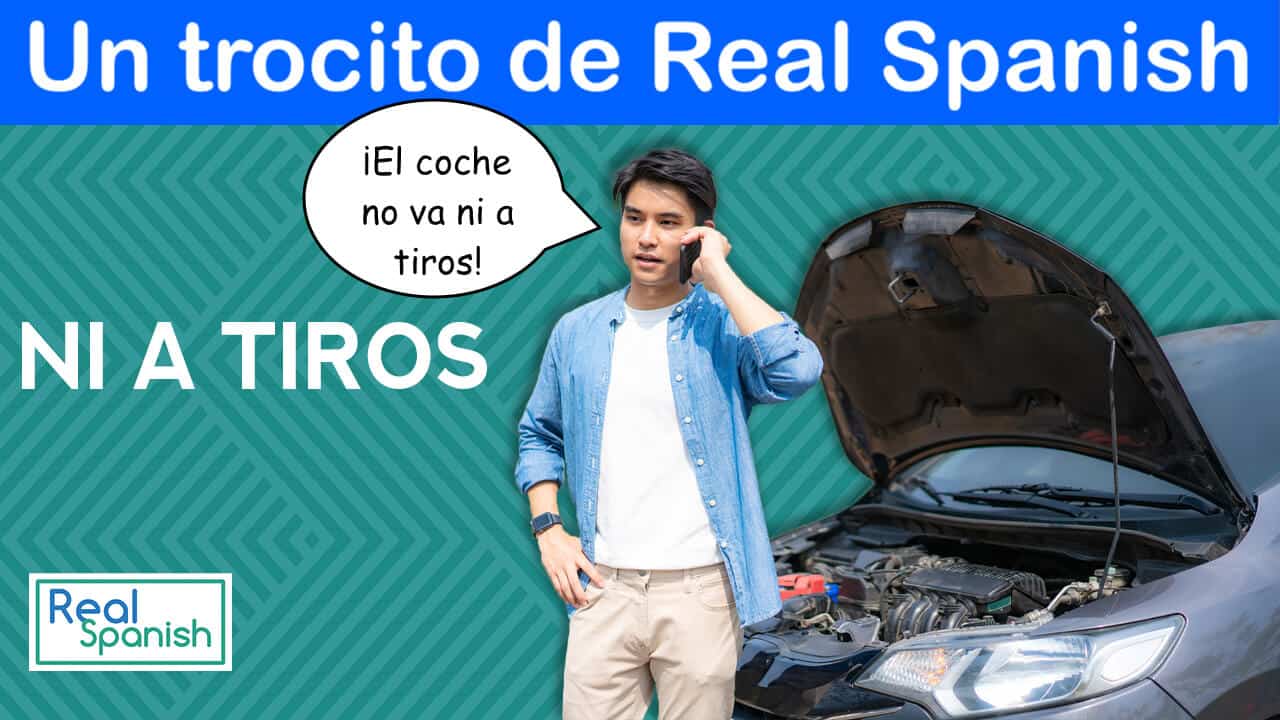
«Ni a tiros» and other expressions with «tiro»

Do you know the expression Ni a tiros?  José explains this and other expressions with «tiro» in this vídeo. Transcripción del vídeo: Hello and welcome to Real Spanish! Today I am going to explain to you some expressions with the word «tiro», which usually means “a shot” from a pistol or shotgun. Related to this meaning we have the expression «salir el tiro por la culata», that is, to obtain the opposite result to what was expected. Have you ever heard someone say, «me sienta o me cae como un tiro»? It means that something makes you feel very bad. The expression «por ahí van los tiros» means "Yes, you got it right." But it is used more in a negative sense: «Por ahí no van los tiros», which means "You didn't understand well" or "That's not what I mean". We also say« ni a tiros »to express that we cannot or do not want to do something in any way, at all. But be careful not to mix up «tiro» with «tirón», because «hacer algo del tirón» means "to do something all in one go". See you soon!    If you enjoy learning expressions like these, you'll love our mini-lessons. Click below to try a free preview lesson. Click here to view all our mini-lessons. Have you heard other expressions with the word «tiro»? Tell us about it below! You can also leave us a suggestion, a comment or a question. We'd love to hear from you. Enjoy your Spanish with us. Click below to get a free mini-lesson and learn about all our online Spanish courses and mini-lessons.    Click here to view all our great materials.

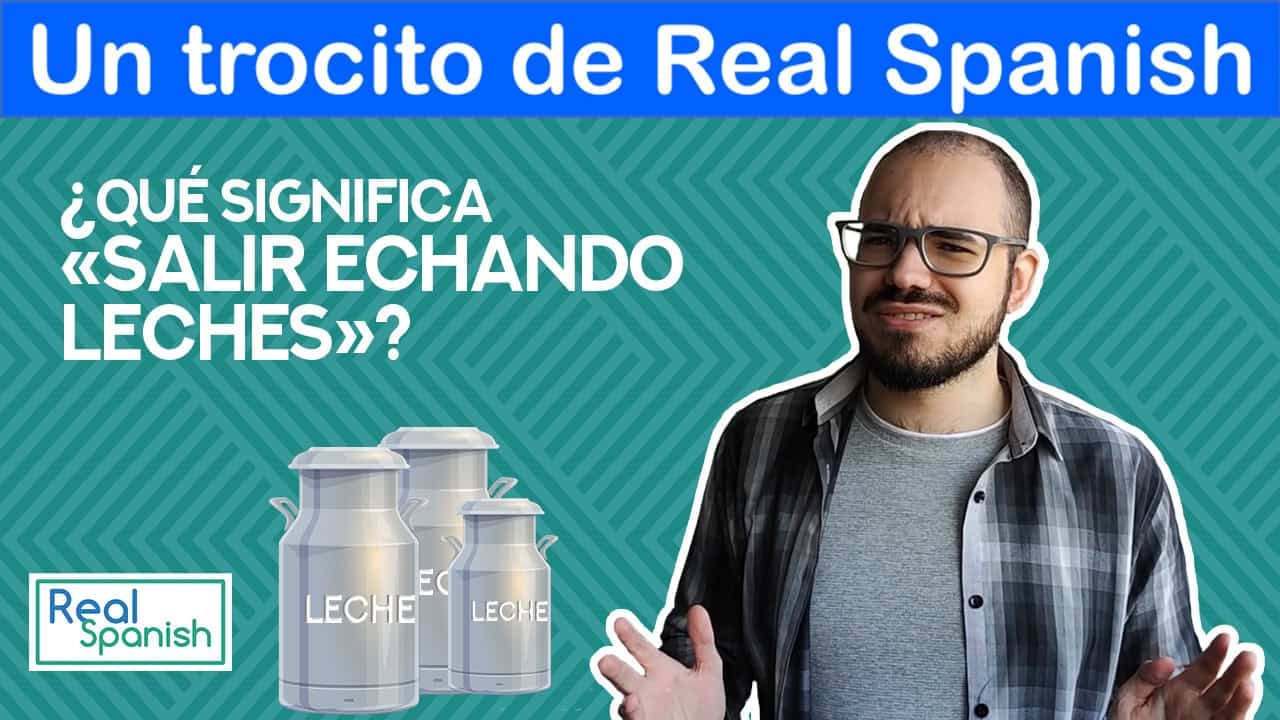
«¡Eres la leche!» (You’re something else!)

This is a transcription of the video above. There are many colloquial Spanish expressions with the word «leche»— some of them quite vulgar, so be careful! You can find more detailed information in the blog below. If you'd just like to listen to the audio (while you're cooking, doing the laundry, or riding the bus) you can get it on Soundcloud. English transcription: Hi! I'm Miguel, a teacher on Real Spanish. I'm sure you have often heard the word «leche» in colloquial conversations. Well it has many meanings. Some of these expressions are quite vulgar, from "semen" to "to hit oneself" (darse una leche), depending on the context.  But today I’m going to explain the meaning and origin of the phrase «ir (o salir) echando leches», which means “to rush” or “to be in a hurry". The expression comes from way back, when the milkman or milkmaid delivered milk to people’s homes. They were always in a hurry so that the milk was there for breakfast by the time people got up. The milk often spilled over if the pail was full to overflowing. I mean, the milkman or milkmaid rushed around spilling milk on the ground. Another expression with the same meaning is «cagando leches». It sounds vulgar, right? Well, when a horse carried the milk churn, the milk often spilled over, forming puddles on the ground, as if the horse were shitting. Milk is very important in Spanish culture. La lechera de Burdeos, a famous painting by Goya from 1827, was reproduced in this stamp in 1996. If you’re interested in learning more expressions with «leche», you’ll like our mini-lesson «¡Eres la leche!», where we explain half a dozen more expressions, all very colloquial. The mini-lesson comes with an annotated transcription, a set of grammar notes, and interactive exercises. You can buy the mini-lesson on its own, or you can save 20% if you buy a pack of 5 mini-lessons. Bye for now! In the blogpost below you'll learn a lot more expressions with «leche».  Click here to learn more about the mini-lesson Blogpost: The word «leche» is used a lot in Spanish, not only to refer to the milk of animals such as cows, goats and sheep, or mother’s milk for babies. The dictionary of the Royal Academy of Spanish (Real Academia Española, RAE) gives nine different meanings for the word. Some of these are very colloquial; for example, «una leche» may be a slap to the face. There are also many colloquial expressions featuring the word «leche». You can see more examples below. Milk and milk products have been part of the gastronomy of Spain for more than 11,000 years. Milk is a component of the Mediterranean diet and is used in many traditional dishes and recipes such as leche merengada, (a dessert prepared with egg yolks, sugar and cinnamon), leche frita (“fried milk”, made with flour, milk and sugar) and arroz con leche (rice pudding). In some Latin American countries such as Argentina o Nicaragua,

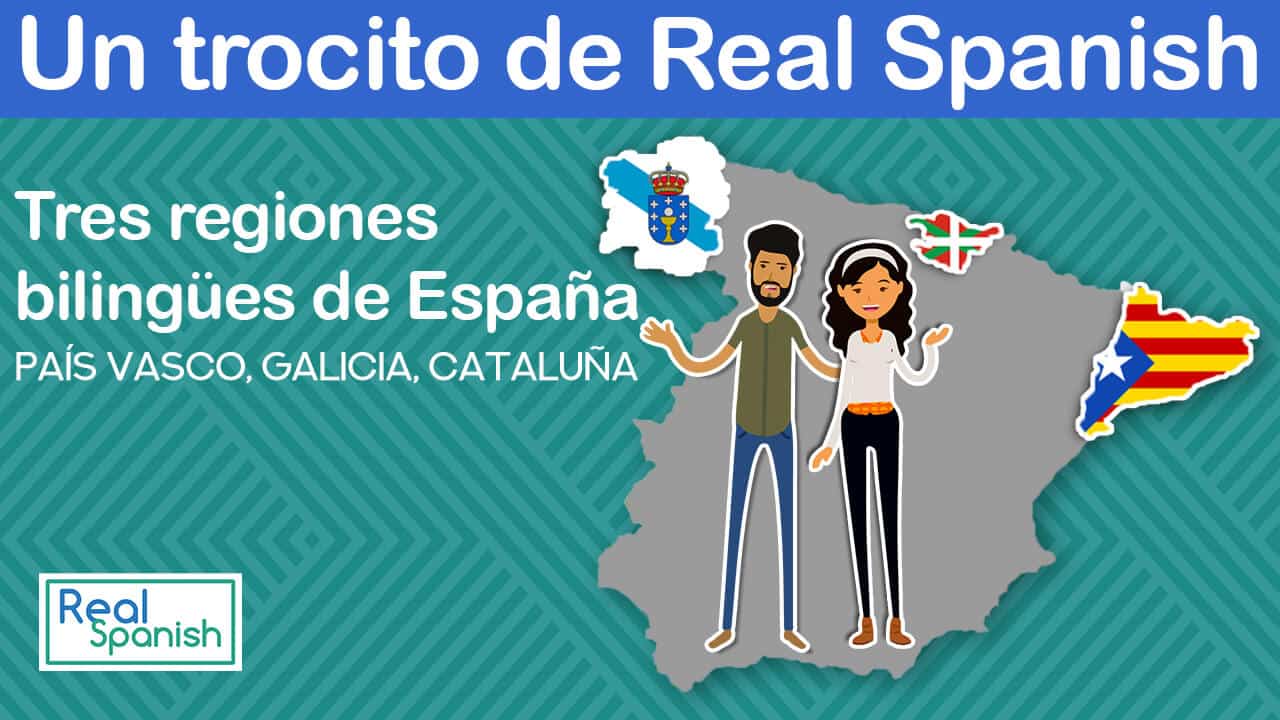
Un trocito de Real Spanish. Tres regiones bilingües de España

This is the transcription of the video above. This video is a preview of our course «Español con noticias y documentales 2: Tres comunidades bilingües de España». Learn some interesting facts about Catalonia, the Basque Country, and Galicia. We recommend that you view the video several times, with and without the transcription, until you understand and can distinguish every word. It’s also useful to read aloud, chiming in with the instructor. In this way you can improve your pronunciation and intonation. This video is a preview of our course «Español con noticias y documentales 2: Tres comunidades bilingües de España». The Basque Country is one of the 17 autonomous regions of Spain, in the northwest of the country. Nowadays it is more and more common to call it Euskadi, which is its name in Euskera, the language of the Basques. Galicia, located in the northwest of Spain, is divided into 4 provinces: A Coruña, Lugo, Ourense and Pontevedra. We say “A Coruña” and not “La Coruña” to respect the Galician language. Galician is a language that comes from Latin and is very similar to Spanish, but influenced by  Portuguese. I’m sure you already know that Catalan is spoken in Catalonia in addition to Spanish. Although both are official languages ​​in this autonomous region, the school language is Catalan and in official organizations Catalan is spoken more than Spanish. In the inland areas of Catalonia, which are less touristic, you usually hear more Catalan than Spanish, while in Barcelona and the coastal area you hear more people speaking Spanish, since there are more people from other Spanish regions and from foreign countries. Sign up today to learn more about this course and try some free sample lessons:  https://realspanish.eu/en Real Spanish: online Spanish courses for people who are serious about improving their Spanish Would you like to know more about these communities and their languages? You may be interested in the following mini-lessons: «¿De dónde viene la lengua vasca?»: Un misterio lingüístico; «No hay moros en la costa» y otras expresiones basadas en la historia;  «¡Ni qué gaitas!»: Hechos clave y curiosidades de Galicia. Click here to view these mini-lessons. If you want longer, more in-depth and challenging lessons, get the complete course!  Please leave us a comment, a question or a suggestion: we'd love to hear from you! Do you know that you can now book private online lessons with Gema, our star teacher?   Real Spanish: Online Spanish courses and mini-lessons for people who are serious about improving their Spanish Click here to view all our materials and book your free sample lesson with  Gema.

This site is registered on wpml.org as a development site. Switch to a production site key to remove this banner.