Learn Spanish Through Hispanic Culture

Do you know when to shake hands or kiss cheeks in Spain — and which cheek goes first? Do you know the key differences between Peninsular and Latin American Spanish, such as vs vos, or the way “z” and “c” are pronounced in different countries and regions? Do you know the origin of expressions like “como Pedro por su casa”, or why Spain’s Christmas lottery is one of the most eagerly talked-about events of the year?

Cultural knowledge is just as important as vocabulary and grammar when you’re learning a language. Without it, even grammatically perfect Spanish can leave you puzzled by what people are talking about.

In this section, we explore Spanish customs and traditions, the fascinating differences between Spain and Latin America, and the cultural references that make conversations come alive. Some of these posts include one of our YouTube videos, Trocitos de Real Spanish. We keep adding new content — had any cultural adventures in Spanish lately? Let us know what topics you’d love us to cover next!

¡Explora la cultura hispánica con nosotros!

Elizabeth from Real Spanish

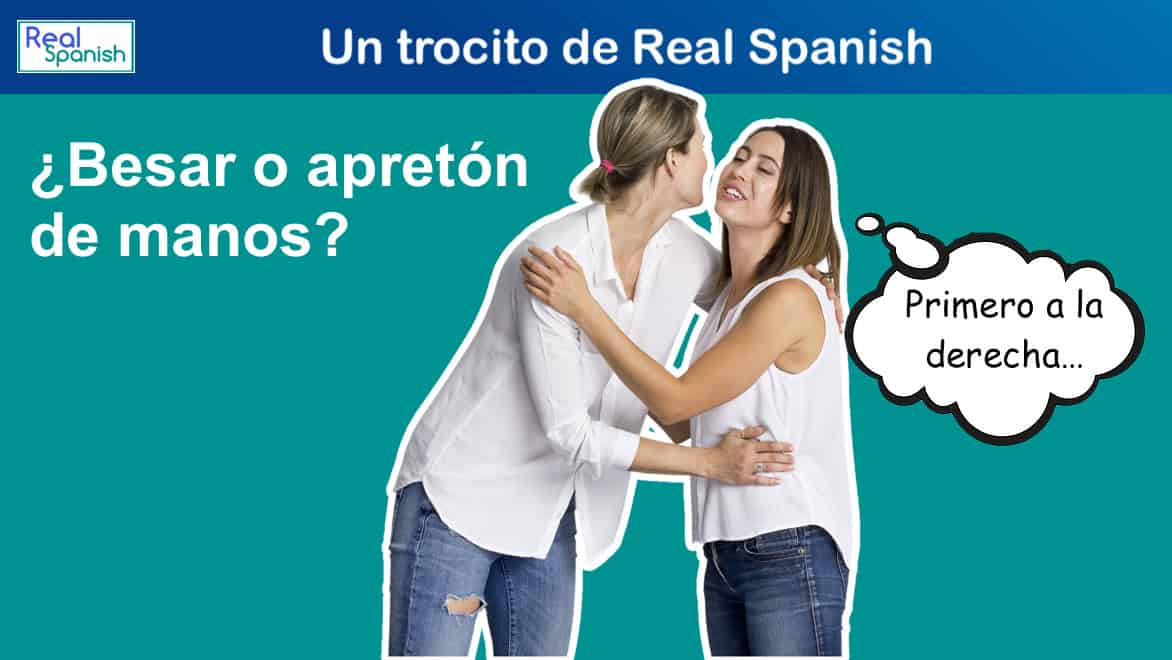
Confused about when to kiss or shake hands? In this video, Virginia explains an important aspect of Spanish culture.

Hi! I'm Elizabeth, from Real Spanish, and a Spanish enthusiast just like you. The first time I came to Spain was to give a talk to groups of teachers in the Basque Country. I left Toronto on a cold and miserable late winter day, and arrived in bright spring sunshine in Bilbao. Sandals and shirtsleeves weather! That trip marked the start of my love for Spain. The teachers seemed to appreciate my work, and over the following years I was invited to work with primary and secondary teachers in many parts of the country. With each visit, I discovered more to admire: the relaxed lifestyle, excellent food, beautiful architecture, and stunning scenery. In time, I realised Spain was where I wanted to retire. I did, and I have been learning the language and adapting to the culture ever since. Why am I telling you all this? I’m telling you about my first trip to Bilbao because it was on that occasion that I was introduced to a woman — an important civil servant in the Department of Education of the Basque Country — who ignored my outstretched hand and kissed me on both cheeks. What Spaniards call the “dos besos” — two kisses, one on each cheek. Then I noticed a lot of cheek-kissing going on around me as people (mostly women) met old friends and new acquaintances. It took me a while, and several more embarrassing occasions when I lunged left just as the other person went right. Awkward! When I started this blog and our YouTube channel I decided to include some videos on cultural aspects of living in a Spanish-speaking country — including customs like the “dos besos “greeting that can catch newcomers completely off guard. This is one of those videos. Why don't I appear in the video? The video is in Spanish, narrated by Virginia, because although I speak Spanish, my accent remains stubbornly British (my original nationality) — and I felt it was important for the videos to be narrated by native Spanish speakers, to give you an authentic Spanish-language experience. So here is Virginia to help you with this important aspect of Spanish culture (transcription below).     Hi, great to see you! Today I’ll explain the cultural norms in Spain regarding kissing or shaking hands. In an informal situation, when a friend introduces you to someone else, it’s normal for women to kiss each other on both cheeks, beginning with the right.   Men usually shake hands, although when friends meet, it’s normal to hug or to pat each other on the back. In a formal setting, such as in a job interview, it’s normal to shake hands. However, don’t be surprised if, when you meet someone in a meeting or a conference, they kiss you on the cheek… as long as one of you is a woman. When you greet your colleagues whom you see every day, a greeting such as ¿qué tal? or ¿cómo va todo?, etc., is fine. So, some

«Ponte las pilas!»: Improve your vocabulary by reading extensively

This blogpost is about the importance of reading to improve your Spanish. You'll get some useful advice on how to choose your reading material. You'll also learn how the Día del Libro, also known as the Day of Sant Jordi in Catalonia, is celebrated in Spain on April 23rd each year. Read extensively to improve your vocabulary and broaden your cultural knowledge According to applied linguists such as Stephen Krashen, the best way to improve your vocabulary is to read a lot, just slightly above your present level. According to Paul Nation, a leading expert on vocabulary development in a second or foreign language, to be able to get meaning from what you read, and to be able to figure out the meaning of most of the words you don’t know, you should already know at least 95% of the words in a text. To check the readability of a text, read a page without looking anything up but underlining or highlighting each new word. Count the number of words in several lines. Average out the number of words per line then multiply it by the number of lines on the page. Then count each underlined or highlighted word once, no matter how many times it appears on the page and whether it appears in only one form or several (e.g., mentira, mentir, mentiroso/a). Then calculate the percentage by dividing the number of known words by the total number of words. If this comes to more than 5%, this material will be hard going. Struggling with text is not motivating, so save it for later and look for something more accessible for now. You can read whatever interests you: novels, biographies, magazines, press articles, children’s books, graphic novels, practical or informational books or articles on cooking or gardening or the climate crisis… But read a lot! The first time you meet a new word, decide if it is essential to your general understanding of what you are reading. If not, skip it! It will surely come up again, and each time it does you will get a clearer idea of its meaning. Alternatively, if you don’t like ambiguity, use a reading app that has a built-in bilingual dictionary. Click on the word, and it will pop up with a translation. Sometimes you will encounter a known word that the writer is using in a more figurative or idiomatic sense. For example, if you know the word leche but you don’t understand how the writer is using it, click on the word and you’ll get not only a definition but also various expressions such as tener mala leche (to be bad-tempered) or estar de mala leche (to be in a bad mood). (Check out our post on the many ways of using leche in Spanish.) If you can find audiobooks, so much the better… you will improve your listening comprehension too! You can also look for a good text-to-speech app if you are reading electronically. Once you know the text well

El paso o la procesión

Solemne y alegre: Holy Week in the Hispanic World

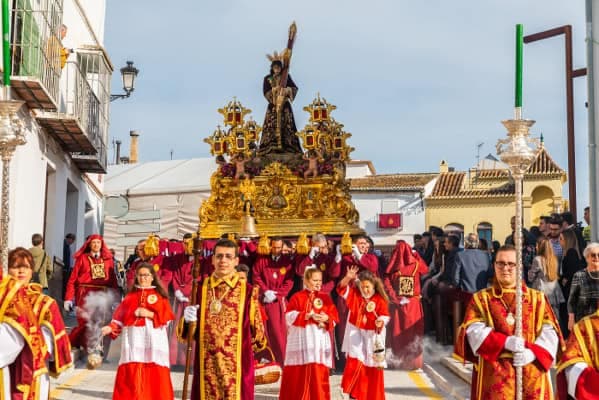
  Semana Santa (Holy Week) is a religious festival that lasts a whole week. It begins on Domingo de Ramos (Palm Sunday) and continues until Domingo de Resurrección (Easter Sunday). The dates change ever year, according to the lunar calendar and the arrival of spring. During the week the streets are filled with processions of pasos, huge wooden platforms carrying religious figures of Jesus and the Virgin. The pasos are carried through the streets on the shoulders of men called costaleros. The processions are accompanied by musical bands as well as Nazarenes and Pentinents, members of religious  cofradías (brotherhoods) who participate in the processions wearing capes, tunics, and pointed hoods in colours that represent their cofradia. The Nazarenes carry cirios (huge candles) while the Penitents carry crosses or wear chains on their ankles. The hoods seem very menacing to some people from other countries because they resemble those worn by the Ku Klux Klan, but they do not have the same significance. The hood in Semana Santa dates from the Inquisition, when people who were being punished for religious reasons were made to wear them as a symbol of penitence. In Andalusia, in southern Spain, this celebration is intense. Many people feel enormous devotion to one of the pasos, and many get up very early or go to bed very late in order to see the procession leave the church. The pasos usually come out in the evening, during the night, or very early in the morning. People may also pay to sit on chairs that the town hall provides in the streets where the processions pass by. Others remain standing and always in silence, to show respect to the figure of Jesus or the Virgin.     People really dress up for the occasion, and some women wear a black dress and a mantilla (a traditional head-dress of silk lace held in place with a high comb). Sometimes the procession stops near the balcony of a house and someone sings a saeta, a sacred Flamenco-style song typical of Semana Santa, sung with great emotion.             Although it is a religious festival, many people enjoy the week going out to bars and meeting friends, while others use the time to travel. Special foods include torrijas, desserts made with fried bread, milk and honey.       In Latin America Semana Santa is also celebrated with great passion, and each country has its own traditions. In many countries “carpets” of flowers, sawdust or sand are created in the streets. Many people participate in the creation of these colourful carpets.     In Ayacucho in Peru indigenous traditions are mixed with the Catholic religion. On Palm Sunday there is the Entrada del Chamizo, a procession of mules decorated with traditional embroidery and carrying dry palm branches which will be burnt a week later on Easter Sunday, as a symbol of purification. The celebration, the music, the joy, and the colourful traditional clothes are mixed with moments of

carnaval mundo hispánico

¡Es una pasada! Celebrating Carnival in the Hispanic World

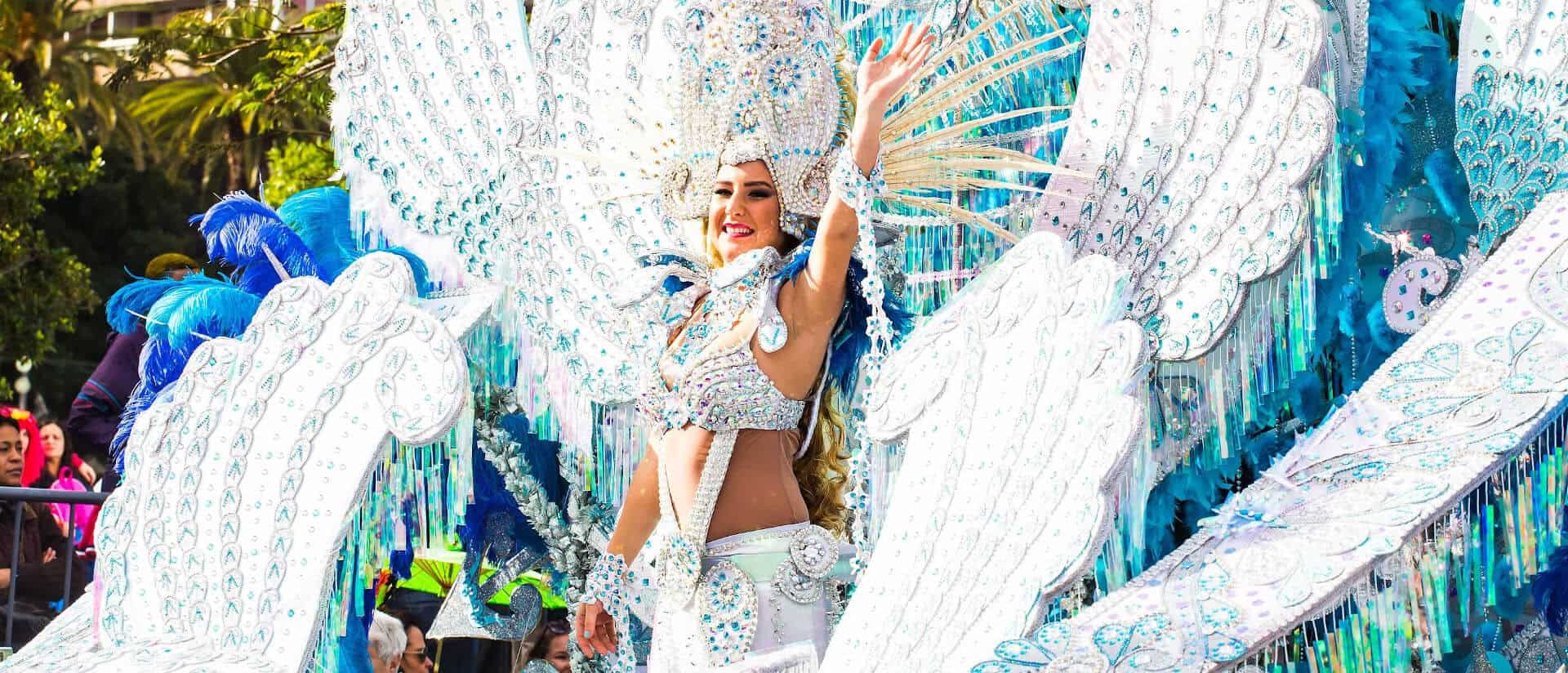
  Carnival in the Hispanic World After reading this blogpost in English, we recommend that you read it in Spanish Carnival is a celebration with both religious and pagan origins. It’s related to Lent, the forty days of spiritual preparation before Easter. Its pagan origins are related to the festival of Bacchus, the Roman god of wine, and other Roman festivals. Carnival is celebrated between February and March; the date changes because it has to begin on a Thursday, known as jueves lardero or jueves gordo (Fat Thursday). It ends on the following Tuesday, which is called Carnival Tuesday.This festival is called Mardi Gras (Fat Tuesday) in France, the United States (especially New Orleans) and Brazil; in the UK and other English-speaking countries this festival is called Pancake Tuesday or Shrove Tuesday. The origins of the word “carnival” may be the Latin carnelevarium, the prohibition of eating meat during Lent, or it may be related to carrus navalis (boat on wheels) that carried Bacchus during the Roman Bacchanalia festival. This celebration varies a lot; each city has its own characteristics and customs, but in general it involves costumes, music, parades and street parties.     In Spain two cities are noted for their different ways of celebrating Carnival. The Carnival of Cádiz and the Carnival of Santa Cruz de Tenerife have been declared Fiestas of International Tourist Interest by the Government of Spain. The festival is also important in Águilas, Murcia and other cities such as Badajoz and Las Palmas de Gran Canaria. The Carnival of Cádiz is different from other Carnivals because its flair and sense of humour. People come out on the street wearing funny and very original costumes. In the Gran Teatro Falla (named for the musician Manuel de Falla, who was born in Cádiz) there are musical competitions among groups singing satirical songs or serious songs in praise of the city of Cádiz. The groups include chirigotas, comparsas, coros and cuartetos.     The chirigotas are the most entertaining because of their lyrics and their costumes; they usually use satire to criticise current social or political events. But they can be heard outside the theatre too; there are many groups that come out to sing in the street, and people wearing costumes listen to their songs in a joyful and amusing party atmosphere.     The Carnival of Tenerife is influenced by the Brazilian Carnival. It is noted for its colourful parade, rhythm and imagination. During the Gran Gala Carnival Queen is chosen, a beautiful young woman who is the centre of attention during the parade, wearing a huge fantastical costume. This gala to choose the Carnival Queen is broadcast on television and is one of the most anticipated and important events of the city. But this Carnival is also celebrated in the street. La Plaza de España de Santa Cruz is decorated and is full of refreshment stands or churrerías, and people go there to enjoy music in a festive atmosphere. Carnival Tuesday is the

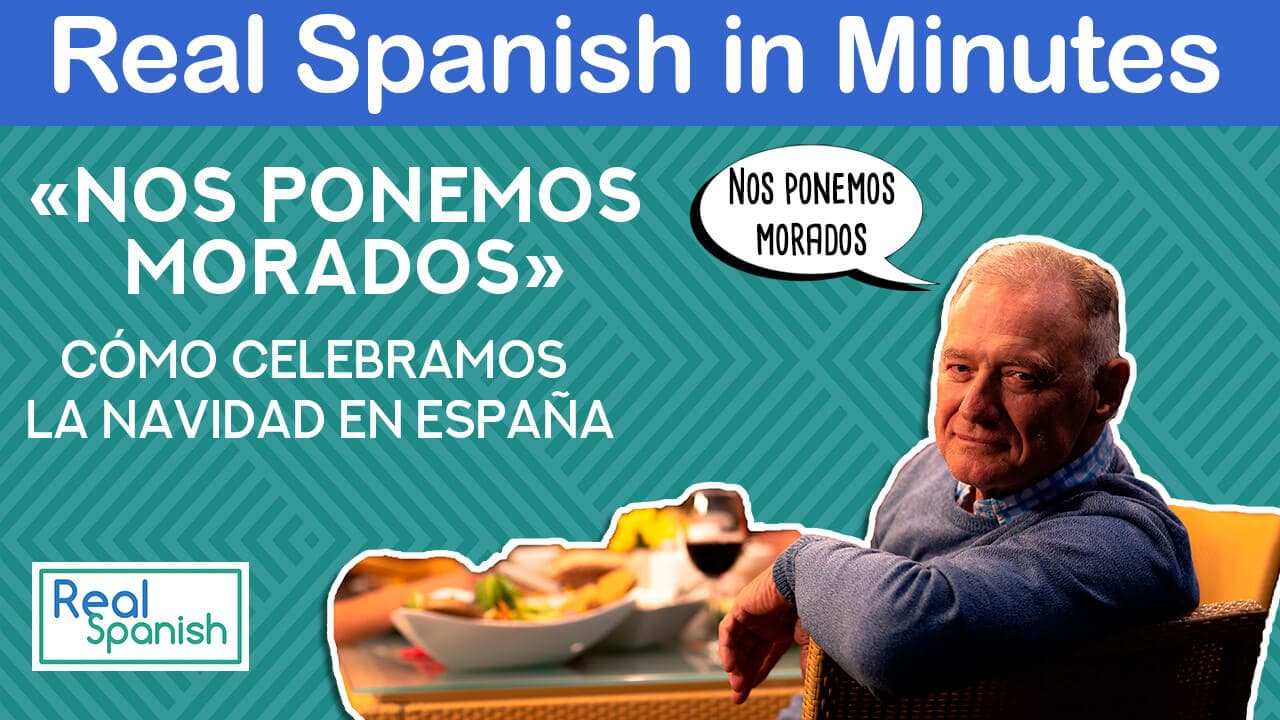
Christmas in Spain and other Hispanic countries

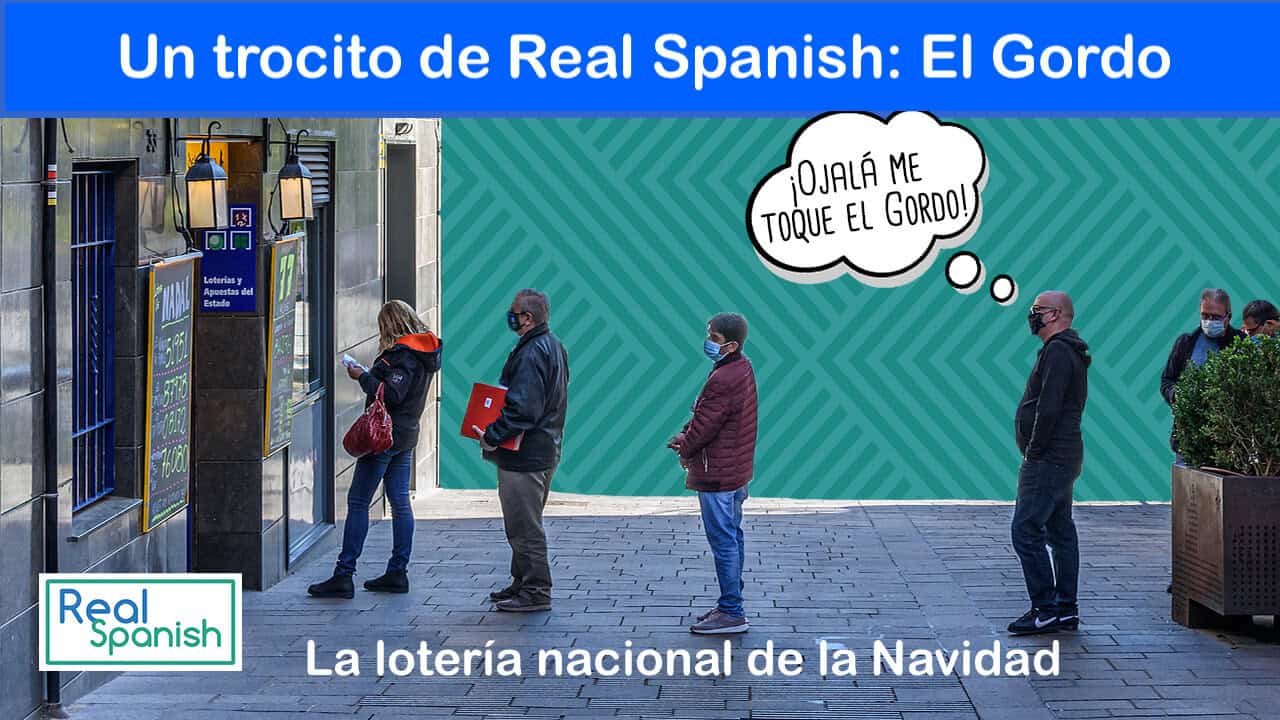
Learn some words and phrases related to Christmas in the Hispanic world. Before reading this blogpost, we suggest you view our video and the related blogpost about El Gordo (The Christmas lottery). Real Spanish: for people who are serious about improving their Spanish.  Click here to view all our materials.  One of the most characteristic things about Christmas in Spain is the belén (Nativity scene), also known as the pesebre (manger), or nacimiento (birth). The belén can be seen in December in many homes and businesses. However, its origin is not Spanish; King Carlos III of Spain brought the tradition from Naples. But the belén is a tradition not only in Spain but also in many Latin American countries as well as Naples, the south of France, Poland… Portal de Belén In Cataluña it’s traditional to display the figure of the caganer (shitter) doing his business in the fields. This figure is a symbol of fertility and prosperity and is supposed to bring good luck in the year ahead. You can see Christmas trees in many homes and commercial establishments as well as in public spaces such as plazas and local monuments. They are decorated with garlands, baubles, and lights, with a star at the top. Caganer Árbol de Navidad In Spain Christmas is mainly celebrated the evening of December 24th, the day of Nochebuena (Good Night). The whole family gathers to enjoy a special dinner. The dishes vary according to the region; some people like to full the table with delicious tapas, while others prefer a more formal dinner with first course, second course (fish or meat), and dessert. The important thing is to eat something special, something we don’t eat often. Typical sweets in Spain include turrón, mazapanes and polvorones. Turron Mazapan Polvorones In Latin America turkey is very popular, and panetón or sweet bread is a typical dessert. But every country has its own traditional foods. On Nochebuena people often sing villancicos (Christmas carols) accompanied by the tambourine and the zambomba, a kind of drum. Zambombas y Panderetas - "Ambiente navideño en las calles de Madrid" by M. Martin Vicente is licensed under CC BY 2.0 Speaking of the zambomba, we should mention the Zambomba Jerezana (in Jerez de la Frontera, Cádiz), a popular celebration that has been recognised as a cultural asset. It originated in the 18th century, when neighbours used to meet in the interior patios of their buildings, to sing and to share food and drink. Zambombas Jerezanas - "Zambomba 2016 de la Fundación Cajasol en Jerez" by fundacioncajasol is licensed under CC BY-NC-ND 2.0 At twelve o’clock the midnight Mass is celebrated to commemorate the birth of Jesus; however, attendance at Mass is less and less common among Spaniards. Finally, you probably already know that in Spain gifts are traditionally exchanged not at Christmas but on January 6, the day of the Three Wise Men. Links to articles and videos: Recommended video: https://www.youtube.com/watch?v=KQx7KGOoI9Y (short version of the above): https://www.youtube.com/watch?v=-K3b34NALeg Information based on: https://es.wikipedia.org/wiki/Zambomba

¿Coche o carro? y otros diferences entre el español de España y el de las Américas

In this video, Virginia explains some of the differences between the Spanish of Spain and Latin America Spanish. This is the first of a series of videos on this topic.  Hello and welcome to Real Spanish! I’m sure you already know that the Spanish that’s spoken in Spain is not the same as the Spanish spoken in Latin America. The accents and many words vary from country to country, and even among different parts of the same country. Also, some grammatical forms vary. Argentinian Spanish is very different from Colombian Spanish, and Andalusian Spanish is quite different from the Spanish spoken in Madrid. Normally you’ll understand and be understood in any Spanish-speaking country… although it’s good to know some words that can cause confusion or embarrassment. For example, the verb «coger», in common use in Spain, has sexual connotations in some Latin American countries. Another dangerous word: in Spain «Concha» is a common female name. It's not a reference to seashells that you find on the beach; it’s the diminutive of the name Concepción. But watch out! In Latin America, «concha» may refer to the exterior part of the vagina. In Argentina it’s very common to say, «¡La concha de tu madre!», as an expression of anger. In Spain it’s more common to say «¡Hijo de puta!» or «¡La madre que te parió!». Here are some less risky examples: El zumo in Spain is jugo in Latin America El móvil is a celular in Latin America El ordenador is a computadora in Latin America Las gafas are anteojos in Latin America (because you wear them in front of your eyes) El coche es el carro o el auto in Latin America. In Spain, el carro is a cart or trolley in a supermarket. In some of our courses and mini-lessons we have examples of Spanish from various places, to help you to understand native speakers, wherever they are from. For example, in this clip, one of the characters is from Argentina, while the other is from Galicia, in Spain. Listen: - Hombre, yo era director de un banco, de esas cosas entiendo algo. - ¡Che! ¡Director de banco! ¡Qué bárbaro! ¿Vos qué sos, otro Rockefeller? One of these days I’ll bring you other examples of the different varieties of Spanish. Bye for now!We plan to publish more videos about some of the differences between different varieties of Spanish.  Follow us on YouTube so you don't miss them! Please leave us a comment, a question, or a suggestion: we'd love to hear from you! Enjoy your Spanish with us! Click below to learn more about all our great materials.  Real Spanish: online Spanish courses and minilessons for people who are serious about improving their Spanish Click here to learn more about all our great materials